Academics
Three schools. One ascent toward wisdom.
“The entire object of true education is to make people not merely do the right things, but enjoy the right things — not merely learned, but to love knowledge.”
Kindergarten through 6th grade
Grammar School
Students at the grammar level are ripe for honing their use of language and knowledge as foundational skills. We help students hone these skills by taking in new information, memorizing it, and reciting it through song, poetry, and chant. “Education begins with memory and imitation” (Sayers, 1947).
Cultivating wonder and a love of learning at this age allows students to appreciate their education in a different and distinct way. Integration of content areas gives students the opportunity to make connections that help them begin to build a deep core body of knowledge. Students at the top end of the grammar phase (6th grade) are preparing for their transition into the logic level of the Trivium.


7th and 8th grade
Logic School
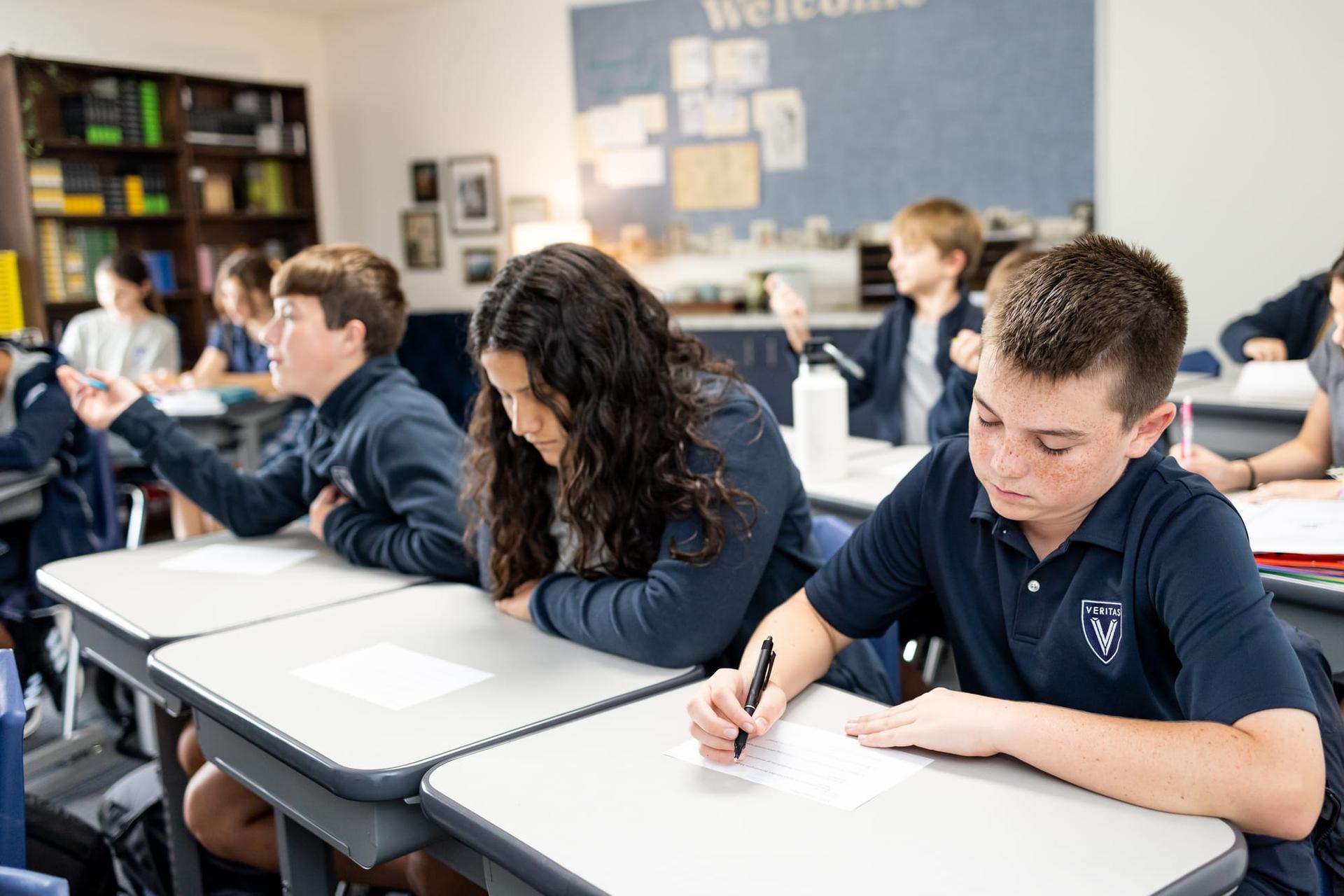
The second level of the Trivium is logic. During these two years students will begin, as Clark & Jain state in The Liberal Arts Tradition, finding arguments, following questions, demonstrating reasons.
Students at this level have a tendency to be argumentative. They use the information they have learned to dispute, and they love to catch others in error, especially their parents and teachers. Instead of suppressing this tendency, we use it! Our teachers mold and shape students by teaching them how to question through informal and formal logic classes as well as through Socratic seminar. As students master argument, questioning and reason, they are ready for the final level of the Trivium.

9th through 12th grade
Rhetoric School
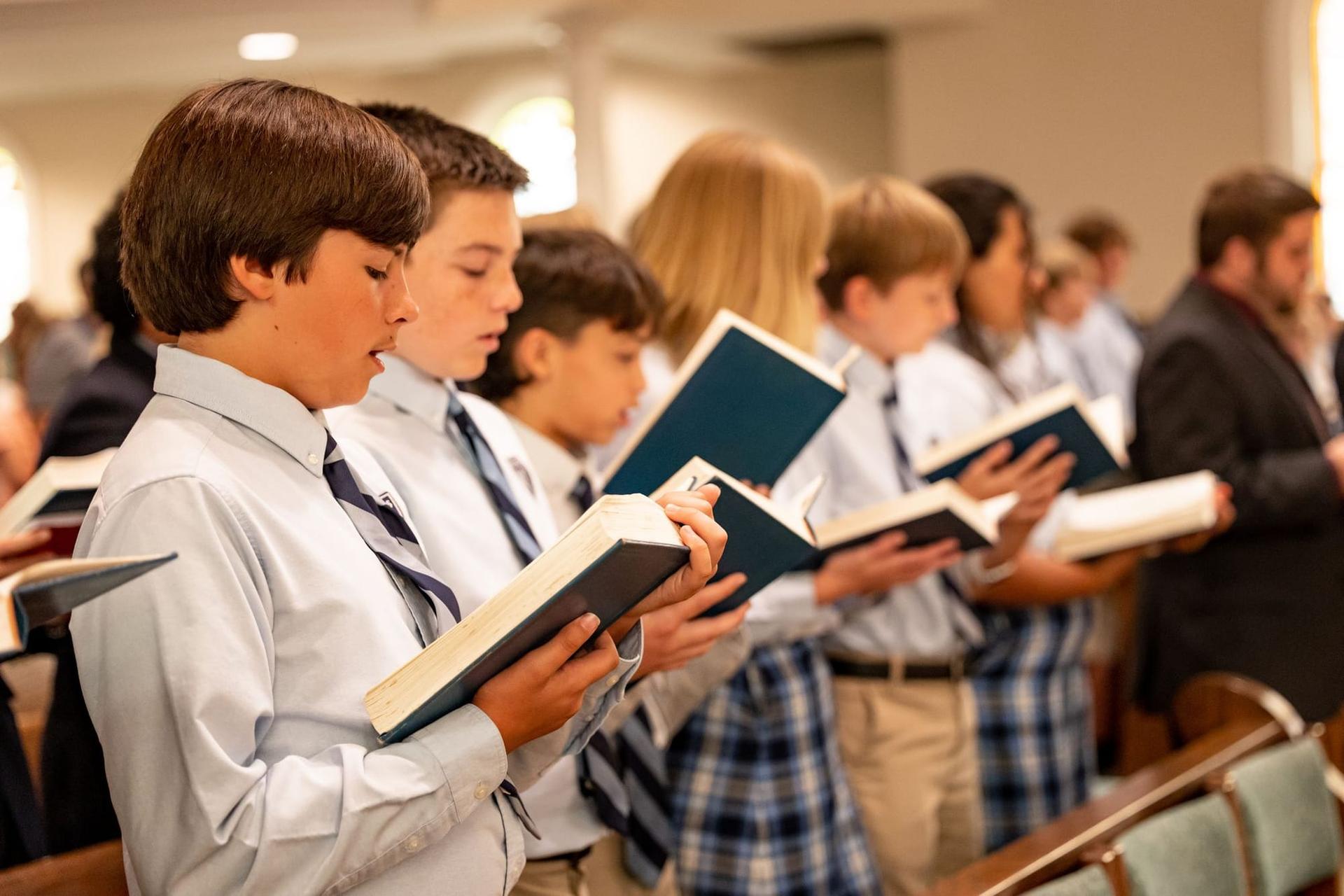
The rhetoric school experience is founded upon the realm of wonder, reason, and community. Upon completion of the logic school, a student has experienced each of these attributes, but each is incomplete and immature, just as the student himself is immature in the understanding of information.
Education culminates at Veritas in rhetoric school with “the cultivation of the trained affections” (Lewis, 1949) for a lifetime of reasoning, learning and wonder. Inevitably the culture of the school educates as much as its curriculum; virtue and piety play a role in the pursuit of wisdom. As Louis Markos says, “Unlike values that are man-made, virtue is shaping young people in accordance with a standard that does not change from age to age.”
The tradition considers rhetoric as the culmination of the arts of language: it brings together key skills cultivated in grammar and logic for the purpose of creative and persuasive speech, and it also leads learning from the classroom, so to speak, into the public square.

Life outcomes of ACCS alumni
What the research shows.
A 2018–19 comparative study, commissioned by the ACCS and conducted with the University of Notre Dame, surveyed 24–42 year-old alumni of public, secular private, Catholic, evangelical Christian, religious homeschool, and classical Christian schools on their life choices, preparation, attitudes, values and practices.
This research seems to confirm what history has repeatedly demonstrated: classical Christian education can influence the course of a home, a community, or a nation. These results can be understood more fully by visiting the schools themselves.
Read the full Good Soil report · More on classical education

Admissions
Come by and see us.
The best way to understand a classical Christian education is to watch it happen. Schedule a visit, sit in on a class, and ask us anything.